
Explore Ngoc Hoang Temple (Jade Emperor Pagoda) in Ho Chi Minh City
1. Overview of Jade Emperor Pagoda
Other Names: Dien Ngoc Hoang or Phuoc Hai Tu.
Address: No. 73 Mai Thi Luu Street, Tan Dinh Ward, District 1, Ho Chi Minh City (updated administrative ward structure).
Notable Event: The ancient pagoda was honored to welcome former U.S. President Barack Obama during his official visit to Vietnam in 2016.
Heritage Value: In 1994, Jade Emperor Pagoda was officially recognized as a National Architectural and Artistic Monument.
2. History & Development
Establishment: Built around the turn of the 20th century (circa 1892–1900) by Mr. Luu Minh (dharma name Luu Dao Nguyen, from Guangdong, China) as a shrine dedicated to the Jade Emperor and a meeting house for his congregation.
Renaming Process: In 1982, the shrine was taken over by Most Venerable Thich Vinh Khuong and officially joined the Vietnam Buddhist Sangha. In 1984, it was renamed Phuoc Hai Tu, though locals still affectionately call it Jade Emperor Pagoda (Chùa Ngọc Hoàng).
3. Opening Hours & Best Time to Visit
Opening Hours: 7:00 AM – 5:30 PM daily.
Holiday Schedule: On the 1st and 15th days of the lunar month, the pagoda opens early from 5:00 AM to 7:00 PM.
Jade Emperor Festival: Held most grandly on the 9th day of the first lunar month every year, attracting thousands of pilgrims seeking blessings, prosperity, and peace.
Visitor Tip: Visit on weekdays or early mornings to avoid crowds and enjoy the tranquil atmosphere.
4. How to Get to Jade Emperor Pagoda
Public Bus: Bus routes No. 18, 93, and 150 stop near Dien Bien Phu, Dinh Tien Hoang, and Nguyen Dinh Chieu streets, from where it is just a short walk to Mai Thi Luu Street.
Private Vehicles (Motorbike/Car): Drive along Dinh Tien Hoang or Dien Bien Phu Street and turn onto Mai Thi Luu Street. Note that Mai Thi Luu is quite narrow, so parking large cars can be tricky.
Ride-Hailing / Taxi: Booking a direct ride to 73 Mai Thi Luu Street is the most convenient option.
5. Unique Chinese Architectural Style
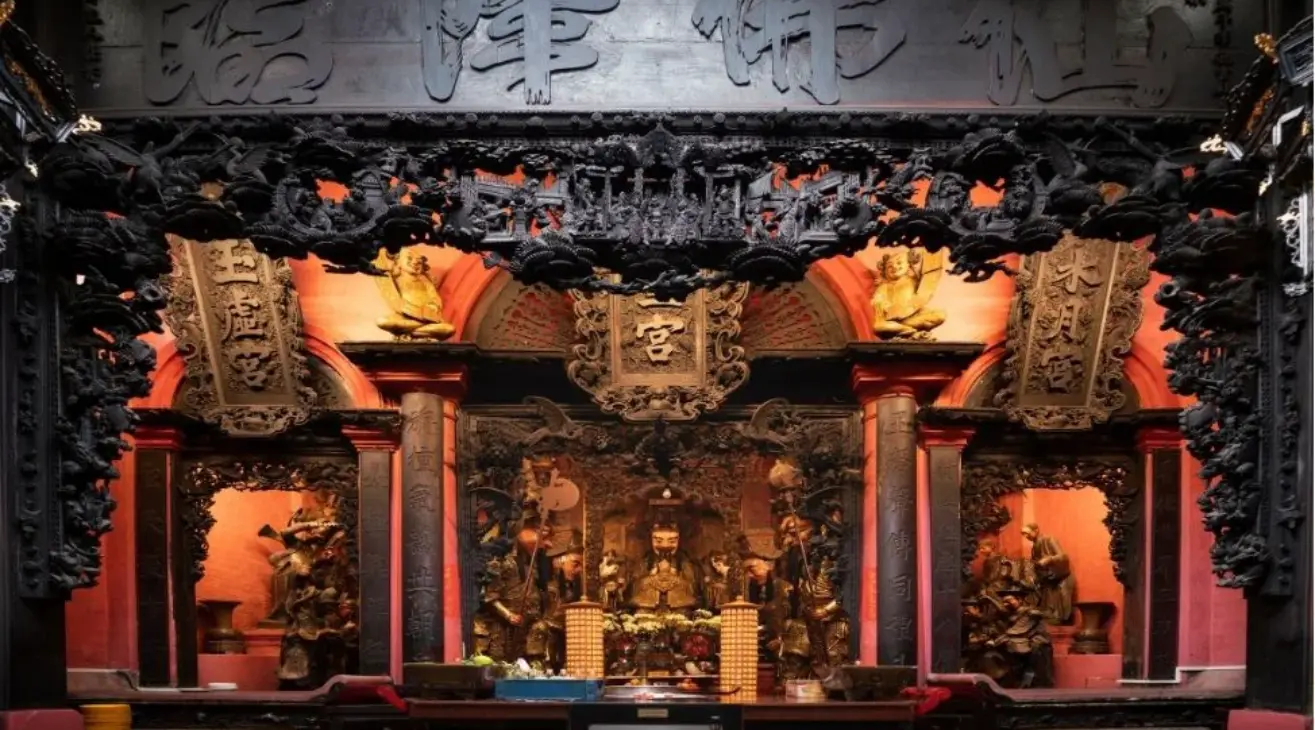
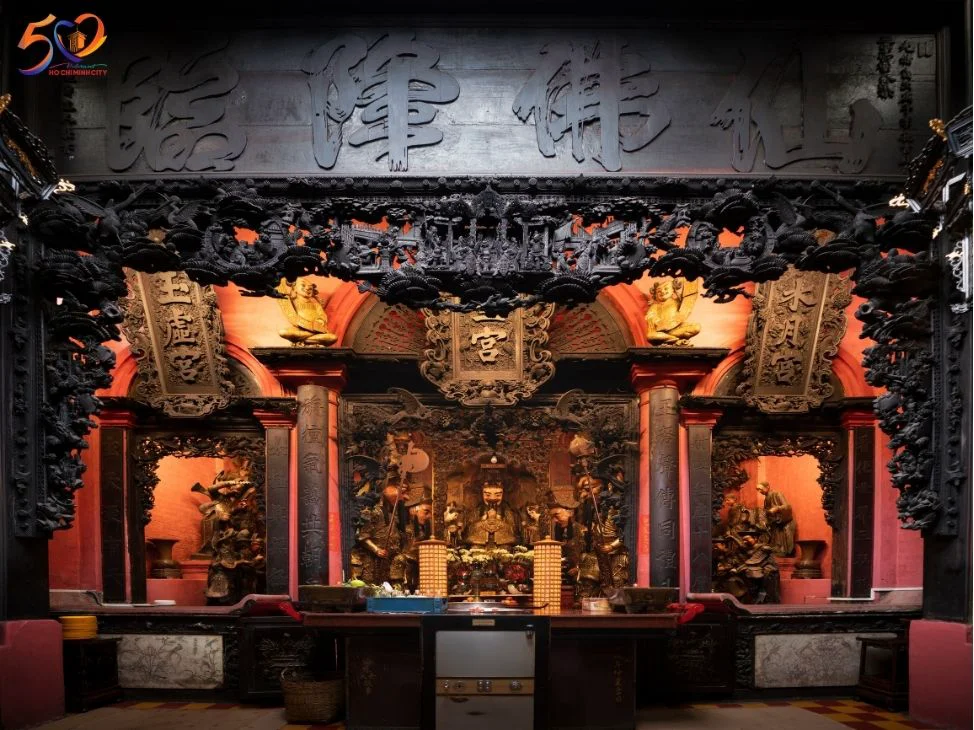
Scale & Materials: Set within a 2,300 m² compound, the pagoda features classic Chinese architecture with yin-yang tiled roofs, sweeping curved eaves, and intricate glazed ceramic figurines.
3 Main Halls:
– Front Hall: Houses shrines dedicated to the Door Gods (Mon Quan), Earth God (Tho Dia), and the Tiger General (Phuc Ho Dai Tuong Quan).
– Central Hall: The main sanctuary dedicated to the Jade Emperor Thuang De, flanked by Nam Tao, Bac Dau, the Medicine Buddha (Phat Duoc Su), Phat Chuan De, and Huyen Thien Dai De.
– Rear Hall (Third Shrine): Dedicated to the Ten Kings of Hell (Thap Dien Diem Vuong) with 10 wooden reliefs depicting the gates of hell, along with shrines for Ong To Ba Nguyet (Matchmaking Deities), Kim Hoa Thanh Mau, and Guanyin (Quan Am).
Collection of Wooden Statues: The pagoda preserves around 300 intricately carved wooden statues that are remarkably vivid and lifelike.
6. A Revered Destination for Spiritual Wishes
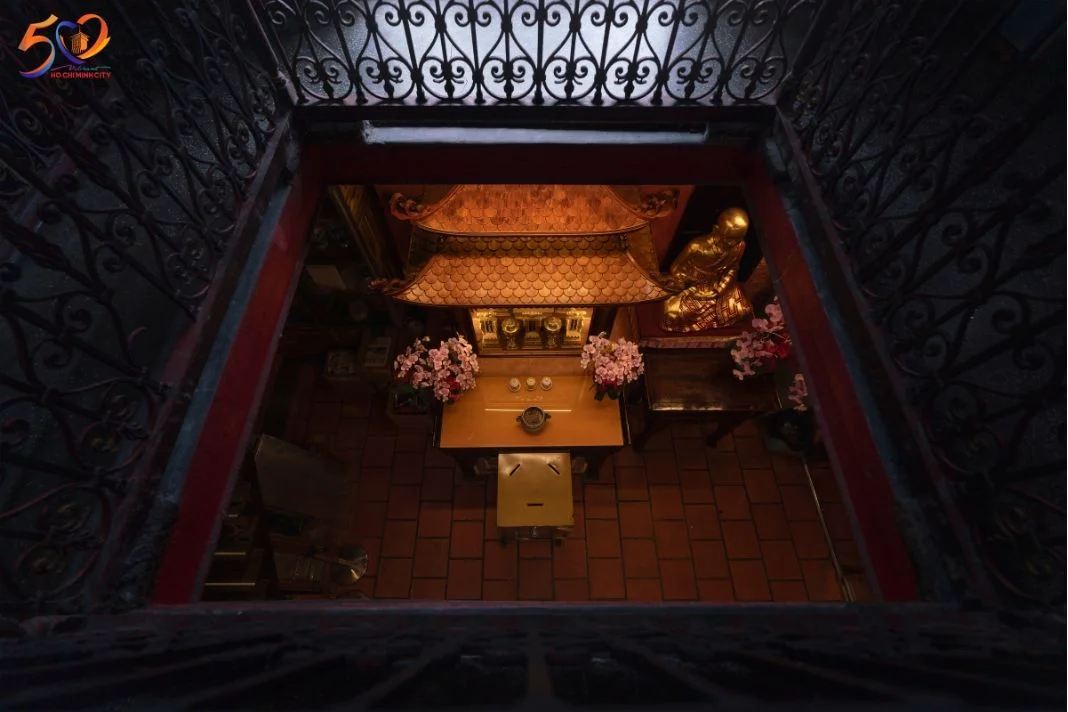
Prayers for Children (Kim Hoa Thanh Mau Shrine): Dedicated to Kim Hoa Thanh Mau and the 12 Midwife Goddesses (Ba Mu). It is a world-famous spiritual sanctuary where childless couples come to pray for fertility and safe childbirth.
Prayers for Love (Ong To Ba Nguyet Shrine): Young adults come here to pray for romance, whispering their loved one’s name and touching the statues of Ong To Ba Nguyet to seek a lasting marriage.
Prayers for Health & Peace: Devotees worship at the Medicine Buddha and Ten Kings of Hell shrines to pray for good health, smooth life, and family peace.
7. Important Visitor Guidelines
Dress modestly and respectfully; avoid wearing short or revealing clothes.
Keep noise levels low, avoid pushing in line, and observe the management’s incense-offering rules.
Ask for permission from management before filming or photographing inside the shrines.
8. Nearby Heritage Attractions
Saigon Opera House: ~3.1 km away
Saigon Central Post Office: ~2.6 km away
Notre Dame Cathedral of Saigon: ~2.5 km away
Independence Palace: ~2.7 km away
HCMC Museum of Fine Arts: ~3.9 km away